
Table of Contents
- How to Ensure OSHA Site Compliance: A Prioritized Workflow
- Your OSHA Construction Site Safety Checklist for Daily Operations
- The Construction Site Safety Inspection Checklist That Catches Problems Early
- OSHA Construction Training Requirements: Who Needs What and How Often
- Common OSHA Violations in Construction and How to Avoid Them
- Inspection Readiness, Employer Rights, and Recordkeeping Rules
- Measuring Safety-Program Effectiveness and Keeping Compliance Current
- Conclusion: Make OSHA Site Compliance a Repeatable Habit
- Frequently Asked Questions
Last Updated: October 14, 2026
How to Ensure OSHA Site Compliance: A Prioritized Workflow
OSHA site compliance is the practice of meeting every applicable workplace safety and health standard the Occupational Safety and Health Administration enforces, from hazard communication and training to recordkeeping and inspections.
The stakes are straightforward. Under the Occupational Safety and Health Act, employers carry a legal duty to provide a workplace free of recognized hazards, and construction consistently ranks among the most-cited industries.
Start With the Standards That Apply to Your Work
Not every standard applies to every site. A roofing crew and a demolition crew face different exposures, and a general contractor’s office staff faces almost none of the physical hazards a field crew does.
The fastest way to scope your obligations is to map your work activities to the standards that govern them:
- Fall protection for any work at height, including roofs, scaffolds, and leading edges
- Scaffolding requirements when you erect or use elevated work platforms
- Hazard communication when chemicals are present on site
A common mistake is copying a competitor’s safety manual wholesale. Standards apply to your tasks, your equipment, and your site conditions, so build the list from your own scope of work.
Walk your site with the standard open on your phone and match each hazard you see to a specific citation number. That single habit turns an abstract manual into a working document your foremen will actually use.
Build the Paper Trail Before the First Inspection
Compliance is proven with documents, not intentions. Before a compliance officer ever arrives, you want a written safety plan, current training records, and a hazard communication program already in place and dated.
Keep these core documents ready:
- A written safety plan tailored to the site
- Training certificates with dates and employee names
- Safety Data Sheets (SDS) for every chemical on site
The OSHA recordkeeping requirements specify which employers must maintain injury logs and for how long, so confirm whether your operation falls under those rules rather than assuming. Digital folders with consistent naming beat a filing cabinet nobody can find.
Your OSHA Construction Site Safety Checklist for Daily Operations
The OSHA construction site safety checklist is a short, repeatable set of checks your crew runs every single day. It is not a one-time audit.
Run these checks at the start of every shift:
- Fall protection in place wherever work happens above grade
- Scaffolds fully planked, guarded, and inspected
- Ladders secured and at the correct angle
Assign one person per shift to own the checklist and sign it. A signed daily log becomes your best evidence that hazards were identified and controlled, which is exactly what a compliance officer looks for.
The Construction Site Safety Inspection Checklist That Catches Problems Early
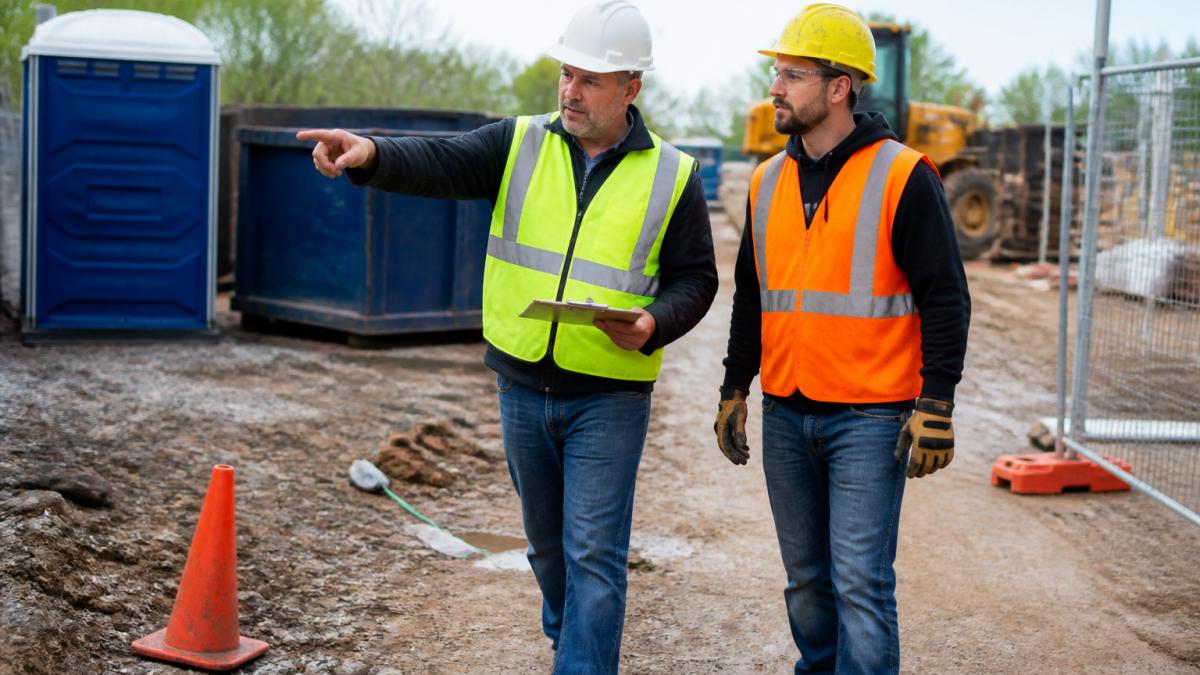
The construction site safety inspection checklist is a deeper, scheduled review that goes beyond the daily walk-through. Where daily checks catch immediate hazards, a formal inspection examines systems: training currency, equipment condition, documentation, and how well your controls actually work.
How Often to Inspect and Who Should Do It
Formal inspections should happen on a fixed schedule, not whenever someone remembers. A common approach is a weekly documented inspection with a monthly deeper audit, adjusted for how fast your site conditions change.
Who should inspect matters as much as how often:
- A competent person with the authority to stop work
- Someone other than the crew that performs the task, for objectivity
- A supervisor trained to recognize the hazards specific to your trade
Rotating inspectors keeps the process honest and spreads hazard-recognition skills across the team.
What to Do When You Find a Hazard
Finding a hazard is only useful if you fix it and document the fix. The workflow is simple: correct the immediate danger first, then address the root cause, then record both.
- Stop work if the hazard could cause serious harm
- Correct the hazard or isolate the area until it is safe
- Record what you found, what you did, and the date
This corrective action loop, find, fix, document, verify, is what separates a compliant site from one that just looks tidy on inspection day.
The most common mistake we see is correcting a hazard verbally and never writing it down. When the same hazard reappears, you have no proof of a corrective action, and a repeat finding reads as a pattern of neglect.
OSHA Construction Training Requirements: Who Needs What and How Often
OSHA construction training requirements depend on the task, not the job title. Different workers need different training, and some training must be refreshed on a set schedule.
Match training to the work:
- Fall protection training for anyone exposed to fall hazards
- Scaffold training for erectors and users
- Hazard communication training for workers around chemicals
Document every session with the date, trainer, topics covered, and attendee names. Ongoing training, not a one-time event, is what keeps skills current as your site and crew change.
Common OSHA Violations in Construction and How to Avoid Them
Common OSHA violations in construction cluster around a handful of hazards that repeat across nearly every site. The fix for most of them is a control you already know about, applied consistently.
| Violation | Typical Cause | Practical Fix |
|---|---|---|
| Fall protection | Missing or inadequate guardrails | Inspect edges daily; install rated systems |
| Scaffolding | Improper erection or planking | Competent-person inspection before use |
| Ladders | Wrong angle or unsecured | Train on setup; check before each shift |
| Hazard communication | Missing labels or SDS | Centralize SDS access; label every container |
| PPE | Not worn or wrong type | Match PPE to hazard; enforce on site |
| Eye and face protection | No protection during cutting | Require shields for all cutting tasks |
The pattern is not exotic hazards. It is basic controls skipped under schedule pressure. Build the control into the task so skipping it is harder than doing it.
Inspection Readiness, Employer Rights, and Recordkeeping Rules
Inspection readiness means your documents are current and your crew knows what to do when a compliance officer arrives. You do not need to fear an inspection if your program runs every day. What follows is the sequence most inspections follow, the rights you hold at each stage, and the recordkeeping decision rules that determine what you must keep and when you must report.
How an Inspection Unfolds
Most inspections are triggered by a programmed schedule, an employee complaint, a referral, a fatality or catastrophe, or a follow-up on a prior citation. The compliance officer’s scope is set by the trigger, and you are entitled to know what that scope is.
A typical walkthrough moves through these stages:
- Opening conference. The officer presents credentials and explains the reason for the visit and the intended scope. Ask for the credentials, note the scope, and designate a management representative to accompany the walk-around.
- Walk-around. The officer inspects the site and may interview employees privately. You have the right to have a representative accompany the officer, and employees have the right to speak with the officer without a manager present.
- Document and record review. The officer may request injury logs, training records, safety programs, and inspection documentation. Provide what is requested promptly; you may ask for time to gather records rather than producing them on the spot.
- Closing conference. The officer summarizes findings and discusses possible violations, abatement timelines, and the process for contesting citations. Take your own notes and ask what evidence would demonstrate abatement.
Employers have rights throughout, including the right to accompany the inspector, to participate in the closing conference, to receive a copy of the citation, and to contest citations and abatement dates through the review process.
Do not direct employees to refuse interviews or to withhold requested records. The correct move is to cooperate with the scope, document what was requested and provided, and raise objections through the formal contest process after the citation issues.
What to Keep, for How Long, and When to Report
Recordkeeping follows decision rules, not guesswork.
Coverage. Many employers with more than ten employees must maintain OSHA injury and illness records (Form 300, 300A, and 301) unless their industry is classified as partially exempt. Confirm your status against the current OSHA recordkeeping requirements rather than assuming.
Reporting deadlines. Certain severe incidents must be reported directly to OSHA, separate from the log:
- A fatality must be reported within 8 hours of learning of it.
- An inpatient hospitalization, an amputation, or the loss of an eye must be reported within 24 hours.
These timelines are short, so the practical step is to name who calls, keep the OSHA reporting line number posted, and rehearse the call before you need it.
Retention. Injury and illness records must be retained for five years following the end of the calendar year they cover.
- Injury and illness records for operations that meet the coverage criteria, retained five years
- Training records kept current for each employee, with dates and topics
- Inspection and corrective action logs retained as proof of your program
Check the current OSHA reporting and recordkeeping guidance for the exact deadlines, since these rules can change and the official source is the only reliable reference.
Measuring Safety-Program Effectiveness and Keeping Compliance Current
A safety program you never measure is a program you cannot improve. Track leading indicators, the activities that prevent incidents, alongside lagging indicators like injury rates.
Measure these:
- Daily checklist completion rate
- Hazards found and corrected within a set window
- Training currency across the crew
Compliance also drifts as rules update and your work changes. Review your standards, training, and documentation on a set schedule, and treat any new task or equipment as a trigger to recheck your obligations.
The sites that stay compliant are not the ones with the thickest manuals. They are the ones that run a short daily check, fix what they find, and write it down. Consistency beats complexity.
Conclusion: Make OSHA Site Compliance a Repeatable Habit
The hardest part of OSHA site compliance is not knowing the rules, it is keeping the daily discipline when the schedule tightens. A prioritized workflow, scoped standards, daily checks, scheduled inspections, current training, and honest recordkeeping, turns compliance from a scramble into a routine. Site Services USA supports that routine with nationwide coverage, same-day emergency service, and ADA-compliant portable sanitation that keeps your site safe and inspection-ready.
Frequently Asked Questions
How do you ensure safety compliance on a construction site?
Build a written safety program, assign a competent person to inspect the site regularly, and document everything. Train every worker on the hazards they face, keep records of that training, and correct hazards as soon as they are found. OSHA site compliance depends on daily habits, not a one-time push. Use a checklist, track corrective actions to completion, and review your program after every incident or near miss.
What is the best way to prepare for an OSHA site inspection?
Keep your written safety plan, training records, and inspection logs organized and current so you can produce them on request. Walk the site before any inspector arrives and fix obvious hazards like missing guardrails, blocked exits, or exposed wiring. Know that you can ask for the compliance officer’s credentials and participate in the opening conference. Designate one person to accompany the inspector and take notes on everything discussed.
What are the most common OSHA violations in construction?
Falls from height, inadequate fall protection, scaffolding problems, ladder misuse, and lack of head or eye protection are consistently among the most cited. Hazard communication failures, missing training documentation, and electrical hazards also appear often. Most of these are preventable with a daily pre-task review and a construction site safety inspection checklist that covers the specific equipment and tasks on your job.
What OSHA training is required for construction workers?
OSHA construction training requirements vary by role and hazard. All workers need hazard communication training, and anyone exposed to falls, scaffolding, excavations, or heavy equipment needs training specific to that exposure. OSHA does not mandate a universal number of hours, but many contractors follow the 10-hour or 30-hour outreach courses as a baseline. Retrain whenever a worker’s duties change or a new hazard is introduced on site.
What records should employers keep to demonstrate OSHA compliance?
Keep your written safety plan, hazard assessments, inspection logs, training certificates, and OSHA 300 logs for recordable injuries and illnesses. Injury reports and incident investigation notes should also be retained. Most records must be kept for at least five years, and OSHA 300A summaries must be posted from February 1 through April 30 each year. Store everything digitally so you can retrieve it quickly during an inspection.
How should contractors correct hazards found during a site inspection?
Fix the hazard immediately if it is an imminent danger, or set a firm correction deadline for less urgent issues. Assign one person to own the fix, document what was done, and verify the correction on your next walkthrough. If the same hazard keeps appearing, treat it as a training or process problem rather than a one-off. Tracking corrective actions to closure is one of the clearest signs of a working safety program.