
Last Updated: October 28, 2026
Quick Summary
Storage containers are worth it for secure job sites when you have valuable materials, multiple trades on site, or a project running for months. Steel walls, a marine-grade wood floor, and reinforced entry points make a container far harder to breach than a trailer, and it keeps materials dry through winter and rainy seasons.
- A job box wins when crews need daily tool access and costs far less than a container.
- A 10-foot container suits a small crew and hand tools; a 40-foot fits heavy material volume.
- Rental usually wins for projects with a defined end date; buying suits year-round, multi-site operations.
- Ask for the full out-the-door cost: first month, delivery, pickup, and any damage waiver.
- Pair a heavy-duty padlock with a lockbox, and add a bolt or cylinder lock on the doors.
Table of Contents
- Why Secure Job Sites Need More Than a Locked Trailer
- Shipping Containers vs. Job Boxes vs. Flat-Pack Units
- Construction Site Theft Prevention Starts With the Container
- Jobsite Storage Container Security: Locks, Walls, and Entry Points
- Job Boxes for Secure On-Site Tool Storage: What They Actually Protect
- Sizing and Placing a Container on an Active Jobsite
- Jobsite Storage Container Rental vs. Buying: Cost and Lifecycle
- Security Planning Beyond the Container Itself
- Frequently Asked Questions
Why Secure Job Sites Need More Than a Locked Trailer
A trailer with a padlock may feel safe, but storage decisions are an important consideration on active projects. At Site Services USA, we deliver storage containers, fencing, and sanitation to jobsites nationwide.
This guide breaks down storage considerations for construction sites. For the broader picture, read the ultimate rental guide for construction sites.
Shipping Containers vs. Job Boxes vs. Flat-Pack Units
The right storage approach depends on what you need to store and how often your crew needs access.
| Option | Best For | Security Level | Portability |
|---|---|---|---|
| Steel shipping container | Bulk tools, materials, equipment | High (steel walls, reinforced doors) | Requires delivery truck |
| Job box | Daily-access hand tools | Medium (heavy-gauge steel, portable) | Fits in a pickup bed |
| Flat-pack container | Short projects, tight sites | Medium (bolted steel panels) | Delivered disassembled |
When a Job Box Beats a Full Container
A job box wins when your crew needs to grab tools several times a day and lock them up at night. It sits close to the work, moves with the crew, and costs far less than a container. For a small remodel or a single-trade crew, a job box plus a locked trailer often covers the basics. What it cannot do is hold lumber, pipe, or heavy equipment at scale.
When a Shipping Container Is the Right Call
A shipping container is the right call when you have valuable materials, multiple trades on site, or a project running for months. Steel walls, a marine-grade wood floor, and reinforced entry points make it far harder to breach than a trailer. It also keeps materials dry through winter storage and rainy seasons. If your site has room for delivery access, a container gives you secure storage capacity that a job box simply cannot match.
Construction Site Theft Prevention Starts With the Container
For related guidance on protecting high-value gear, see our article on securing emergency equipment for construction sites.
Jobsite Storage Container Security: Locks, Walls, and Entry Points
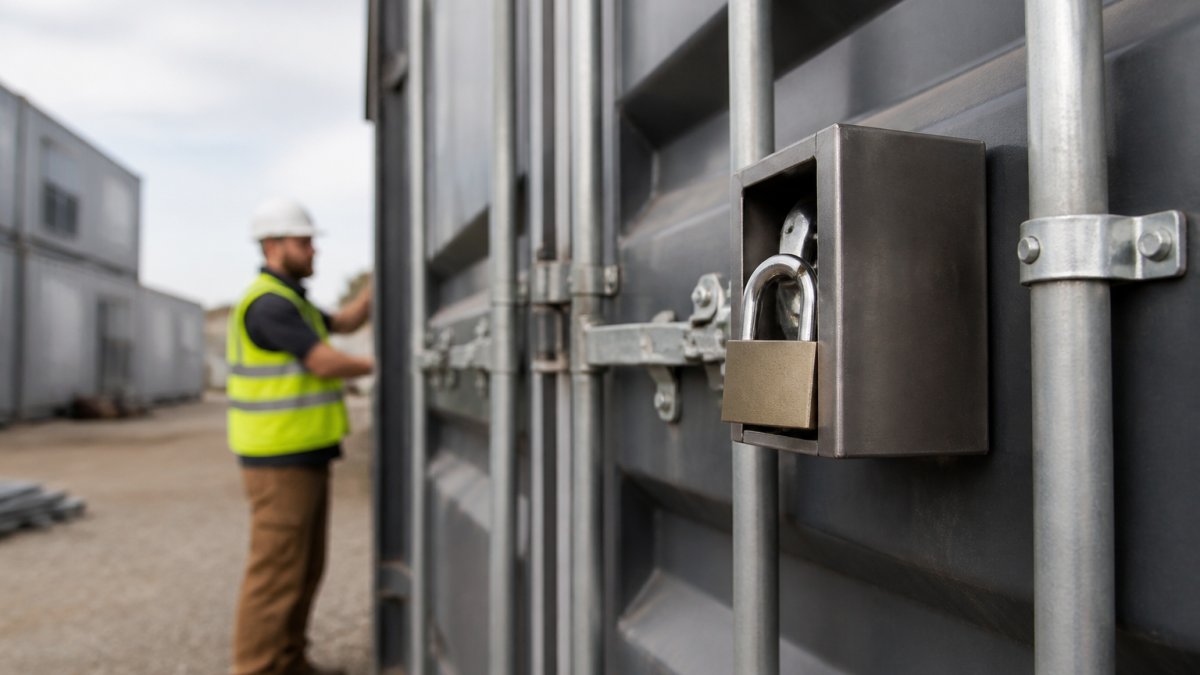
Start with a heavy-duty padlock with a shielded shackle, paired with a lockbox that covers the latch hardware. A bolt lock or cylinder lock adds another layer on the doors. Check the steel walls for rust or thin spots, and inspect the reinforced entry points where the doors meet the frame. Tamper-resistant hinges and a weld-on lock plate make prying far harder. A determined thief can defeat almost anything given time, but every layer you add buys minutes your crew or security can use.
Job Boxes for Secure On-Site Tool Storage: What They Actually Protect
The practical setup is a two-tier system: job boxes near the work for daily tools, and a container for everything else. That split keeps crews efficient and keeps the bulk of your value behind steel walls. It also reduces the number of times the container door opens during the day, which lowers exposure.
Sizing and Placing a Container on an Active Jobsite
Container size and placement are considerations when planning site storage.
Choosing Size From an Inventory Checklist
Walk your inventory before you order. Count the pallets, the long materials, and the equipment that needs to stay dry. A 10-foot container suits a small crew and hand tools. A 20-foot container handles mid-sized crews and daily tool, equipment, and material storage. A 40-foot container fits large projects with heavy material volume. If you need the exact dimensions to check against your site plan, review the 20-foot storage container specs before you commit.
Delivery Access and Placement
Delivery access is where projects go wrong. Measure your gate width, check for overhead lines, and confirm the truck can turn and set the container down where you want it. Tight site access may mean a smaller unit or a flat-pack model that arrives in panels. Keep the doors clear of traffic lanes, leave room for a forklift, and stage the container so it does not block fire access or emergency routes.
Jobsite Storage Container Rental vs. Buying: Cost and Lifecycle
Jobsite storage container rental usually wins for projects with a defined end date. For projects with a defined end date, you can rent a storage container short term for construction and book it directly. Buying makes sense only when you have steady, year-round storage needs and a place to keep the container between jobs. But the decision is not just about the monthly rate, it is about total cost of ownership across the life of the container and the life of your business.
The Cost Factors That Actually Drive the Number
A cheap monthly rate can hide delivery and pickup charges. Always ask for the full out-the-door cost: first month, delivery, pickup, and any damage waiver. That number, not the advertised monthly rate, is what you compare.
Rental vs. Purchase: A Decision Framework
| Situation | Better Choice | Why |
|---|---|---|
| Single project under 12 months | Rental | Delivery, pickup, and maintenance are bundled; no resale risk |
| Rolling projects with gaps between jobs | Rental with a short commitment, or buy if gaps are short | You avoid paying for storage of an idle asset |
| Year-round, multi-site operation | Purchase | The unit pays for itself over time and becomes a reusable asset |
| One-time short project with tight cash flow | Rental | Lowest upfront cash outlay |
Lifecycle Costs of Ownership
Pricing depends on quantity, dates, and delivery, so request a quote rather than relying on a generic figure.
Security Planning Beyond the Container Itself
A container is one layer of a site security plan, not the whole plan. The perimeter matters just as much. If a thief can walk onto your site unnoticed, the container only slows them down. The strongest jobsite security programs treat the container as the vault inside a layered perimeter, and they plan placement, lighting, access, and inventory as one system.
Layer 1: Placement and Visibility
- Coordinate with site lighting. If the site has temporary lighting, aim a fixture at the container doors. If not, a solar or battery-powered motion light on the container is a low-cost layer.
Layer 2: Perimeter and Access Control
Our construction fence rental service delivers and installs chain link panels, privacy screening, and barricades for sites of every size.
Layer 3: The Container and Its Hardware
This is where the lock, lockbox, and reinforced entry points from the previous section do their work. The key is to make the container the hardest target on site so a thief moves on. A weld-on lock plate, a shielded padlock, and tamper-resistant hinges raise the time and noise required to breach the doors.
Layer 4: Inventory Tracking and Deterrence
- Signage stating the site is monitored and inventory is logged.
Layer 5: Coordination and Response
The container is the vault, not the whole bank. Layer placement, perimeter, hardware, inventory tracking, and a crew that reports anomalies, each layer buys time, and time is what thieves do not have.
Frequently Asked Questions
How do storage containers improve security on a construction site?
A steel shipping container gives you a single, lockable structure with steel walls and reinforced entry points, so tools, equipment, and materials sit behind a barrier instead of in the open. A heavy-duty padlock with a protected lockbox makes the door hard to cut or pry. Pair the container with site lighting, fencing, and access control, and you close the gaps that make a job site an easy target for theft.
What should I look for in a secure jobsite storage container?
Check four things: steel construction with no rust-through, lockbox or shrouded lock hardware, a marine-grade wood floor that stays dry, and doors that close flush with no bent frames. Ask about the container’s condition grade and whether it has been inspected for leaks. A tamper-resistant lock setup matters more than container size, so confirm the lock hardware before you sign a rental agreement.
What is the difference between a storage container and a job box?
A job box is a smaller steel chest, usually a few feet wide, built for daily access to high-value hand tools on an active jobsite. A storage container holds bulk materials, equipment, and supplies for the whole project. Many crews use both: a job box near the work area for tools in constant use, and a container for everything else. Eagle Leasing and similar providers frame it the same way.
How much does jobsite storage container rental cost?
Pricing depends on quantity, dates, and delivery, so request a quote rather than relying on a generic figure.
Securing a jobsite is a logistics problem, and it gets easier when one vendor handles the moving parts. Site Services USA provides storage containers, temporary fencing, portable sanitation, and dumpsters with nationwide coverage, same-day emergency service, and fast delivery and pickup. Get started with Site Services USA and build a site that stays secure from the gate to the container door.
