
Table of Contents
- Why Rent a Storage Container for Construction Projects
- Portable Storage Container Sizes and What Fits
- Short-Term Storage Container Rental: Timeline and Booking
- Construction Container Rental Cost Breakdown
- Jobsite Storage Security and Protection
- Site Access, Placement, and Permits
- Frequently Asked Questions
Last Updated: October 12, 2026
Why Rent a Storage Container for Construction Projects
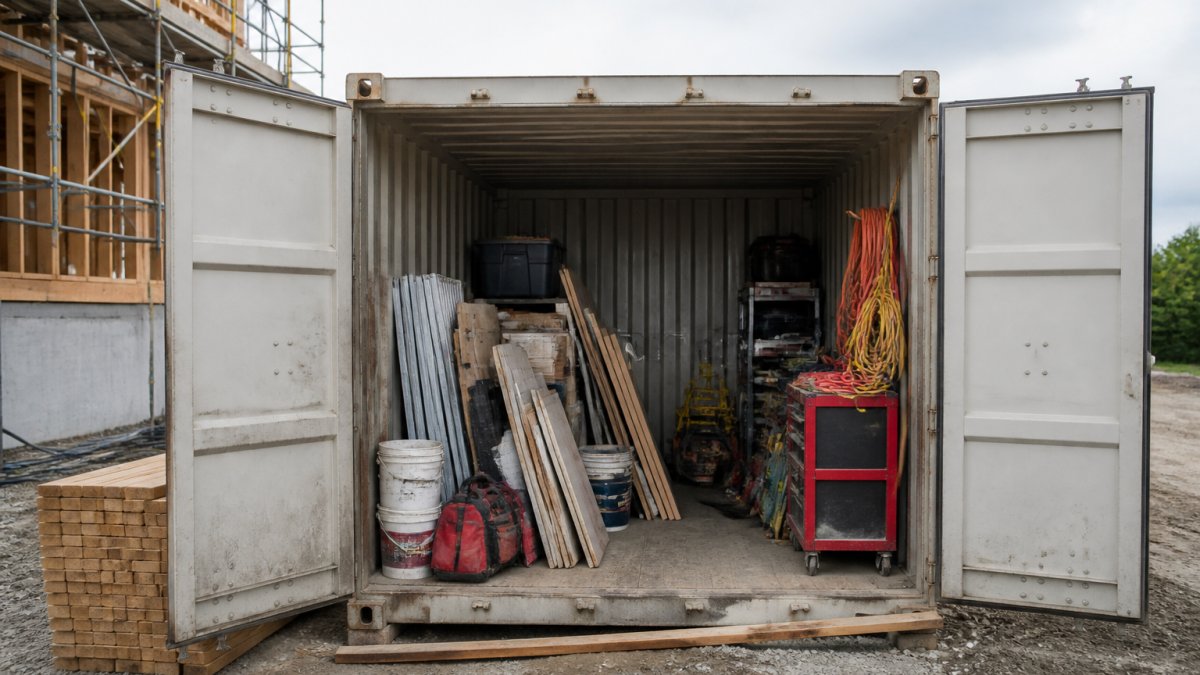
Keeping tools, materials, and equipment organized and protected is critical on a construction project. A storage container rental solves this by providing secure, weather-resistant space right on your job site, so you’re not shuttling materials off-site or leaving expensive equipment exposed.
Site Services USA understands the logistical pressure construction managers face. Delays from missing tools or damaged materials cascade into costly setbacks, and a storage container rental eliminates that friction with immediate on-site storage and no permanent infrastructure commitment.
Short-term rental flexibility is what makes this work: whether your project runs three weeks or three months, you scale storage to match actual needs, with no long-term commitment or excess space you’re paying for but not using.
On-site storage keeps your project moving. Tools stay accessible, materials stay protected, and your team stays focused on the work instead of hunting for equipment.
Portable Storage Container Sizes and What Fits
The right container size depends on how much inventory you need to store and for how long. Site Services USA offers a range of container sizes to meet diverse project needs.
10-Foot Containers
A 10-foot portable storage container works well for smaller jobs or as supplementary storage on larger sites. It holds roughly 400 cubic feet, enough for hand tools, power equipment, safety gear, and smaller material stockpiles, and its compact footprint eases placement on tight job sites.
Many contractors use a 10-foot container for specialty tools that need protection but not constant access. It costs less to rent and is simpler to deliver and place than larger units.
20-Foot Containers
The 20-foot storage container rental is the workhorse of construction job sites, providing roughly 1,160 cubic feet of secure space, enough for a full complement of tools, materials, and equipment on most mid-sized projects.
It’s the most common option because it balances capacity against cost and site logistics, giving you substantial storage without a 40-foot footprint. For projects lasting weeks or a few months, a 20-foot container rental typically covers your needs without excess.
40-Foot Containers
A 40-foot portable storage container offers maximum capacity at roughly 2,300 cubic feet, suiting large-scale or multi-phase projects and sites stockpiling significant material quantities.
The trade-off is logistics: a 40-foot container requires more site access and placement planning, and not every job site can accommodate its length or weight. Assess your layout first, if space and needs justify it, this size eliminates multiple trips off-site.
Short-Term Storage Container Rental: Timeline and Booking
Renting a storage container for a construction project is straightforward, but understanding the timeline helps you plan delivery and avoid gaps in coverage. Most short-term rentals run on weekly or monthly terms, with flexibility to extend or end as your project evolves.
Getting a Quote and Rental Agreement
Start by requesting a quote from Site Services USA with your job site location, storage duration, container size, and any special requirements like placement access or security features.
Review the rental agreement before signing: confirm the rental period, container condition at pickup, your damage responsibility, and the process for extending or ending early. Most agreements allow extensions, but knowing the process in advance prevents surprises.
Delivery and Site Preparation
Once you’ve booked your storage container rental, Site Services USA handles delivery, typically within a few days of your order, with same-day emergency service available. Confirm the delivery date and time window with your site supervisor.
Before delivery, identify a level, well-drained location and clear debris, rocks, or obstacles. Ensure the truck has safe access, checking for overhead power lines, low branches, or narrow passages, and communicate any site constraints to the delivery team in advance.
Improper placement can damage your site or the container. Soft ground, slopes, or obstructed access routes create problems. Confirm your placement location is accessible and stable before the delivery truck arrives.
Extending or Ending Your Rental
If your project runs long, contact Site Services USA before your rental term ends to request an extension. Most providers accommodate extensions with minimal friction, often charging a prorated weekly or monthly rate.
When the project is complete, schedule a pickup and inspect the container before Site Services USA retrieves it. Normal wear is expected, but report any damage that occurred during your rental.
Construction Container Rental Cost Breakdown
Understanding the factors that influence the cost of a short-term construction container rental can help you plan your budget.
The line items on a typical invoice
- Container rental rate. Charged weekly or monthly. Monthly rates are usually lower per day, so a 6-week project may cost less booked as two months than as six weeks.
- Delivery fee. A one-way charge based on mileage from the provider’s yard to your job site. Urban core deliveries and sites more than roughly 30 miles out often carry a higher fee.
- Pickup fee. Often a separate charge from delivery, even when the same truck and driver handle both. Confirm whether your quote bundles delivery and pickup or lists them separately.
- Minimum rental term. Many providers set a minimum of one week or one month. If your project finishes in four days, you may still pay the full minimum.
- Extension charges. If the project runs long, extensions are usually billed at the same weekly or monthly rate, sometimes with a small administrative fee. Ask whether the extension rate is locked at booking or floats with market pricing.
- Damage and cleaning. Normal wear is expected, but broken door seals, bent frames, graffiti, or excessive debris can trigger charges. Photograph the container inside and out at delivery and before pickup.
How size and duration move the total
The total cost is influenced by both the container size and the rental duration. For specific pricing, it’s best to request a quote.
Questions to ask before you sign
- Is delivery and pickup included, or billed separately?
- What is the minimum rental term, and what happens if the project ends early?
- Is the extension rate locked at booking?
- What counts as damage versus normal wear?
- Is there a fuel surcharge or after-hours delivery fee?
- Does the quote include the lock, or do I supply my own?
Ask for an itemized quote that separates container rental, delivery, pickup, minimum term, and any optional services. Two quotes with the same headline number can differ by hundreds of dollars once fees are added.
Site Services USA provides transparent quotes. Request a quote with your project location, expected duration, and preferred container size, and the team will outline the full cost picture.
Jobsite Storage Security and Protection
A steel container stops casual theft, but not a determined crew with a grinder and 20 minutes of privacy, and it doesn’t answer whose insurance pays if the tools walk away. This section covers the practical security setup and insurance responsibilities most rental pages skip.
Locking and access control
A standard container ships with a single locking bar and a hasp that accepts a padlock. Upgrade path, in order of cost and effectiveness:
- A shrouded or hockey-puck padlock. The shackle is enclosed, so bolt cutters cannot reach it. This is the single highest-value upgrade for a few dollars.
- A lockbox welded over the hasp. Prevents the padlock from being cut or the hasp from being pried. Some providers offer this as a rental add-on.
- A secondary lock on the opposite door. Standard containers have two doors; if only one is locked, the other can sometimes be opened from the inside. Confirm both doors are secured.
- An alarm or GPS tracker. For high-value equipment, a battery-powered door alarm or a cellular tracker inside the container gives you notification and recovery options.
Access control matters as much as the lock. Issue keys or combinations only to crew leads who need them, log access, and rekey between phases or when a subcontractor leaves. A container with a shared combination across 30 workers has no access control at all.
Positioning and lighting
Place the container where it’s visible from the job trailer, a lit parking area, or a neighboring occupied building, thieves prefer containers tucked out of sight. Without a natural sightline, add a motion-sensor or solar security light, and on larger sites a camera aimed at the doors is cheap insurance and useful evidence for a claim.
Inventory records
Keep a written or photographed inventory of what goes in and out, a simple log with dates, item descriptions, and initials is enough. If a theft occurs, the log supports the police report and insurance claim; without it, insurers often reduce or deny the claim because the loss can’t be documented.
Who insures what
This is the part most rental agreements bury. In a typical short-term container rental, the provider insures the container itself. You, the renter, are responsible for the contents. That means:
- Your general liability policy may cover third-party claims arising from the container (someone injured by it, damage it causes), but it usually does not cover theft of your own tools and materials.
- Your builder’s risk policy or a commercial property policy is the more likely source of coverage for stored materials and equipment. Confirm the policy covers property in a temporary on-site container, not just in a permanent building.
- Some policies exclude theft from an unattended job site or require a minimum security standard, such as a locked container or a fenced site. Read the exclusions before you rely on the container as your primary protection.
- If you are a subcontractor storing tools on a general contractor’s site, confirm whose policy responds. The GC’s builder’s risk policy may cover the structure but not your tools.
Call your insurance agent before delivery and ask three questions: Does my policy cover tools and materials stored in a temporary container on a construction site? What is the deductible and limit? What security conditions must be met for a theft claim to be paid?
Do not assume the rental provider’s insurance covers your tools. In most short-term container rentals, the provider insures the container and the renter insures the contents. Confirm your coverage in writing before the container arrives.
Site Services USA can confirm the container’s insured condition and provide documentation your insurer may request, but coverage for stored contents is the renter’s responsibility.
Site Access, Placement, and Permits
Before your storage container rental arrives, confirm your job site has the access and space for safe placement.
Ground conditions matter: the container rests on four corner blocks, so soft soil, deep mud, or significant slope can make it settle unevenly or become unstable.
Permits vary by location and project type, and some municipalities require them for temporary structures on construction sites. Check local regulations for your storage container.
Frequently Asked Questions
How do I rent a storage container for a construction project?
Contact your rental provider for a free quote, specify your project duration and container size needs, review the rental agreement for terms and fees, schedule delivery to your jobsite, and arrange pickup when your project ends. Site Services USA offers flexible rental periods. Confirm site access and placement requirements before delivery to avoid delays.
What size storage container do I need for a construction site?
Container size depends on your inventory volume and project duration. Site Services USA offers various container sizes to meet different project needs. Assess your tool count, material quantities, and site space to choose the right fit.
How much does it cost to rent a construction storage container?
Pricing depends on container size, rental duration, and delivery distance. Costs typically include the rental fee, delivery and pickup charges, and any optional services. Request a free quote from Site Services USA to see a complete cost breakdown with no hidden fees.
How do I secure a storage container on a jobsite?
Use heavy-duty padlocks or combination locks on the container doors, position the unit in a visible, well-lit area of your site, and install security cameras if possible. Maintain an inventory log of tools and materials stored inside, and restrict access to authorized personnel only. Ensure your rental agreement specifies insurance coverage and security responsibilities, and verify that your jobsite liability insurance covers stored equipment.
Renting a storage container for your construction project is a practical solution to on-site storage challenges. The right container size keeps your materials organized and protected, your team focused on the work, and your project on schedule. Site Services USA delivers nationwide coverage, fast reliable delivery and pickup, and competitive pricing so you can focus on building. Request a quote today and discover how a portable storage container rental simplifies your next project.