
Last Updated: October 25, 2026
Quick Summary
You can avoid dumpster rental fees by reading the itemized quote line by line before signing and confirming tonnage, rental period, and prohibited items in writing. Negotiate overage caps, free extension days, or waived delivery fees at the quote stage, since fees are far easier to negotiate before you sign than to dispute afterward.
- Overage is billed per ton when debris exceeds the included tonnage, so ask for the per-ton rate and any minimum increment.
- Size up one step if unsure, because extra base cost is usually smaller than a second delivery, pickup, and rental period.
- Book pickup the moment your load is done and confirm the date in writing to dodge extension fees.
- Keep loads level with the top edge and clear the truck’s path to prevent overfill and access charges.
- Ask for the scale ticket with the invoice and compare it to your signed quote if an overage appears.
Table of Contents
- What Actually Appears on a Dumpster Rental Quote
- Dumpster Rental Overage Fees: How Weight Limits Work
- Choosing the Right Dumpster Size to Avoid Extra Costs
- Dumpster Rental Prohibited Items That Trigger Surcharges
- Dumpster Rental Extension Fees and How to Dodge Them
- Loading Rules That Prevent Overfill and Access Charges
- Request a Dumpster Quote and Lock In Your Rate
- Frequently Asked Questions
What Actually Appears on a Dumpster Rental Quote
Most people rent a dumpster once or twice in a lifetime, so the quote looks like a foreign language. The best ways to avoid dumpster rental fees start with reading the quote line by line before you sign.
A dumpster rental quote is an itemized estimate of the base rate, delivery, pickup, included tonnage, and the rental period. Everything beyond those lines is where surprise charges hide.
The Line-by-Line Contract Checklist
Use this checklist on any quote. Each line has a reason it matters, not just a box to tick.
- Base rate, separate from delivery. If the base rate and delivery are bundled into one number, you cannot compare haulers or tell whether a “free delivery” offer is real.
- Delivery fee and pickup fee listed individually. Some haulers quote one-way and bill the return trip later. Confirm both are included.
- Included tonnage written in tons, not “standard load.” “Standard load” is not a number. Ask for the tonnage figure and the overage rate per ton in the same sentence.
- Rental period defined in days, with exact start and end dates. Confirm whether the clock starts at delivery or at booking, and whether weekends count.
- Overage rate per ton disclosed in writing. Ask whether there is a minimum overage increment.
- Extension fee per extra day stated. Compare it to the cost of a second rental if the job runs long.
- Prohibited items list attached. A verbal list is not a contract term.
- Fuel or environmental surcharge named, not buried. These are common add-ons; ask whether they are flat or percentage-based.
A quote that lists one flat number with no breakdown gives you nothing to compare and no protection when the invoice arrives. Ask for the itemized version in writing, and keep the signed version.
How to Verify Each Line Before You Sign
Reading the quote is half the job; verifying it is the other half.
- Match the tonnage to your debris. Run a weight estimate for your load and compare it to the included tonnage. If you are within 20% of the limit, ask about the overage rate before booking.
- Match the rental period to your project timeline. If your project has phases, ask whether the period can start at delivery rather than at booking.
- Confirm access terms. Ask what fee applies if the truck cannot reach the drop zone, and whether a relocation counts as a new delivery.
- Get the prohibited items list in writing and compare it to what your crew will actually throw away.
- Ask for the total in writing, including taxes and surcharges. The number you compare across haulers should be the out-the-door number, not the base rate.
Negotiating at the Quote Stage
Every fee on the quote is easier to negotiate before you sign than to dispute after the invoice arrives. A common pattern is to ask for the overage rate to be capped, the rental period extended by a day or two at no charge, or the delivery fee waived on a larger container.
For plain answers on how each line item works, our dumpster rental FAQs cover fees and policies in detail.
Dumpster Rental Overage Fees: How Weight Limits Work
Dumpster rental overage fees are charges billed per ton when your debris weighs more than the tonnage included in your base rate.
Two numbers decide your bill: the weight limit included in your quote and the actual weight at the landfill scale. Every roll-off dumpster is weighed on the way out (empty) and on the way back (loaded). The difference is your tonnage.
A Practical Debris-Weight Estimator
Most practitioners find that volume-based sizing fails on heavy debris because a cubic yard of one material can weigh ten times a cubic yard of another. Use these approximate ranges to predict overweight risk before you load. They are planning figures, not scale-accurate numbers, and moisture content moves them significantly.
| Material | Approx. weight per cubic yard |
|---|---|
| Mixed household junk, furniture, cardboard | 150-300 lb |
| Yard waste, branches, leaves | 300-500 lb |
| Wood framing, pallets, lumber | 300-500 lb |
| Drywall and plaster | 500-800 lb |
| Roofing shingles | 800-1,100 lb |
| Tile, ceramic, and stone | 1,000-1,500 lb |
| Concrete, brick, and asphalt | 2,000-3,000 lb |
| Dirt, sand, and gravel | 2,000-3,000 lb |
A simple calculation method: estimate the volume of each material in cubic yards, multiply by the range above, and add the results. Compare the total to the included tonnage on your quote (1 ton = 2,000 lb).
Weigh the heaviest single item before it goes in. A single pallet of shingles or a loaded wheelbarrow of concrete can be the difference between a base-rate bill and an overage charge.
How the Overage Charge Is Calculated
Overage is usually billed per ton, often prorated to the nearest fraction the hauler’s scale reports. A common pattern is a minimum overage increment, so a few hundred pounds over the limit can still trigger a full increment charge.
Heavy materials blow through tonnage fast:
- Concrete, brick, and asphalt
- Dirt, sand, and gravel
- Roofing shingles
- Tile and stone
- Plaster and drywall
A common mistake is mixing one pallet of shingles into a light junk load. That single pallet can push the whole container over its included tonnage and trigger an overweight fee.
Preventing the Charge Before You Load
- Confirm the included tonnage in writing, in tons, not “standard load.”
- Run the estimator above before the container arrives.
- Keep heavy material low and spread evenly so the scale reads a balanced load.
- Ask whether a heavier-duty container or separate heavy-debris haul is cheaper than the overage rate.
- Request the scale ticket with the invoice and compare it to your estimate.
If the invoice shows an overage you did not expect, the scale ticket is your first document. Compare the empty and loaded weights, confirm the included tonnage on your signed quote, and ask for the overage calculation in writing. Disputes are usually resolved by matching the ticket to the contract terms.
Choosing the Right Dumpster Size to Avoid Extra Costs
Choosing the right dumpster size is the single biggest lever on your final bill. Too small and you rent twice.
Size by debris volume, not by project type alone.
| Project | Typical Size Range | Watch For |
|---|---|---|
| Small cleanout or minor remodel | 10-15 yard | Filling fast with bulky items |
| Mid-size renovation | 20 yard | Mixed heavy and light debris |
| Full home cleanout | 30 yard | Weight from appliances and furniture |
| New construction or demolition | 30-40 yard | Concrete and shingles pushing tonnage |
Our project-by-project sizing guide breaks down which container fits common jobs, so you can match size to debris volume before you book.
If you are unsure, size up by one step.
Dumpster Rental Prohibited Items That Trigger Surcharges
Dumpster rental prohibited items are materials the hauler will not accept in a standard roll-off, and dropping them in anyway triggers a surcharge or a rejected load.
Items that commonly trigger extra charges:
- Tires
- Appliances containing refrigerant, such as refrigerators and freezers (the EPA)
- Electronics and televisions
- Water heaters
- Paint, solvents, and chemicals
- Batteries and fluorescent bulbs
- Medical waste and sharps
Hazardous waste never belongs in a roll-off. Federal rules under the EPA hazardous waste regulations govern how these materials are handled, and your local landfill sets its own acceptance rules on top of that.
Ask for the prohibited items list in writing before delivery. Then brief your crew.
Choosing a hauler with clear written policies protects you here. Our guide on how to choose a dumpster rental company covers the questions to ask before you sign.
Dumpster Rental Extension Fees and How to Dodge Them
Dumpster rental extension fees are daily charges added when you keep the container past the agreed rental period. Most standard rentals run a set number of days, and every day after that adds to the bill.
The fix is scheduling, not luck. Book pickup the moment your load is done, and confirm the date in writing.
A fee-prevention timeline keeps you ahead of it:
- Day of delivery: confirm the exact pickup date on your paperwork.
- Two days before pickup: check the fill level and call if you need more time.
- One day before pickup: clear access so the truck is not turned away.
- Pickup day: have the load level and the path open.
For larger jobs, plan the rental window around your actual debris flow. If you are running a long residential cleanout, our guide to renting dumpsters for large residential cleanouts shows how to stage the work so one rental period covers it.
Loading Rules That Prevent Overfill and Access Charges
Overfill and access charges come from two avoidable mistakes: loading above the fill line and blocking the truck’s path. Both are easy to prevent with a five-minute briefing.
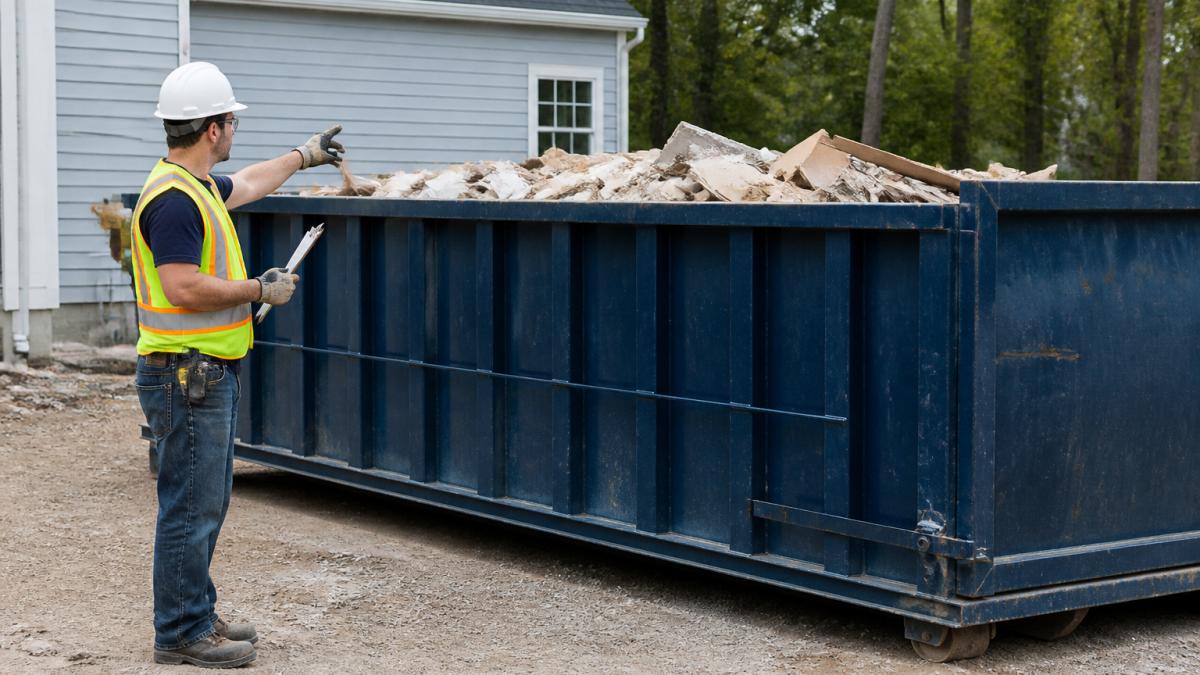
Keep every load level with the top edge of the container.
Access matters just as much. The truck needs clear room to back in, and overhead lines can block a raised container. Walk the delivery path before the truck arrives:
- Clear parked cars and equipment from the drop zone
- Trim low branches along the approach
- Confirm the surface can carry a loaded truck
- Keep the container gate clear for the driver
If access is tight, tell the hauler when you book. A failed delivery attempt can carry its own fee, and a relocated container may cost more.
Request a Dumpster Quote and Lock In Your Rate
Every fee above is negotiable at the quote stage and expensive to fix after the fact.
When you are ready to book, you can browse dumpster rental and waste removal options and request a quote with the line items spelled out.
At Site Services USA, we build quotes around what you actually need.
Get started with Site Services USA and rent the right container at a rate you can plan around.
Frequently Asked Questions
What fees can be added to a dumpster rental?
Common add-ons include delivery and pickup fees, overage charges for exceeding the included tonnage, overfill penalties for loading above the fill line, late-return or extension fees, and surcharges for prohibited items such as tires, appliances containing Freon, electronics, and hazardous chemicals. Some companies also charge for extra days, blocked access, or re-delivery. Ask for a written quote that lists every line item and confirm what the base rate covers before you book.
How can I avoid dumpster rental overage fees?
Estimate debris weight before you order. Heavy materials like concrete, dirt, and roofing shingles add up fast, so separate them from bulky household junk. Ask the company for the included tonnage and the per-ton overage rate, then keep your load under that limit. If you are unsure, order a smaller dumpster for heavy debris and a larger one for light materials. Weighing your own bags or using a project-based estimator can keep you inside the limit.
What is not allowed in a rental dumpster?
Most companies prohibit hazardous waste, paint, solvents, motor oil, tires, electronics, appliances containing Freon (such as refrigerators and air conditioners), and sometimes mattresses. Concrete, dirt, and asphalt may be allowed only in dedicated heavy-debris containers. Check the prohibited items list before loading. Putting a banned item in the dumpster can trigger a surcharge, a rejection of the load, or a requirement to remove the item at your own cost.
How do I choose the right dumpster size to avoid extra costs?
Match the container to the debris type and volume. A 10-yard dumpster suits small cleanouts or heavy materials like concrete; a 20-yard handles mid-size renovations; a 30- or 40-yard fits large construction or event waste. Measure your debris pile or estimate by room count, then confirm the weight limit for that size. Ordering too small leads to overage or a second rental, while ordering too large wastes money on unused capacity.
